As a restaurateur, you understand that a reliable, efficient, and user-friendly phone system is essential to streamline operations, enhance customer experience, and drive growth.

Effective communication—especially with customers—is a crucial factor in the success of any business. Restaurants are no exception. As a restaurateur, you understand that a reliable, efficient, and user-friendly phone system is essential to streamline operations, enhance customer experience, and drive growth.
But what phone system is really worth the investment? What would be the best fit for your business?
We dove deep into the potential options for restaurant phone systems and compiled our findings in this comprehensive guide. This resource aims to help you make informed decisions for your restaurant business, specifically to help you transform your phones into an essential revenue channel.
While COVID and its aftermath presented challenges to the restaurant industry, it also ushered in an era of more rapid technology adoption. The sheer volume of options can be overwhelming for restaurant owners looking to invest in new technology. Then comes the question of how all the different pieces of technology work together to maximize efficiency, generate revenue growth, and create an excellent guest experience.
Let's clarify things.
Here's a high-level look at the essential components of the restaurant tech stack:
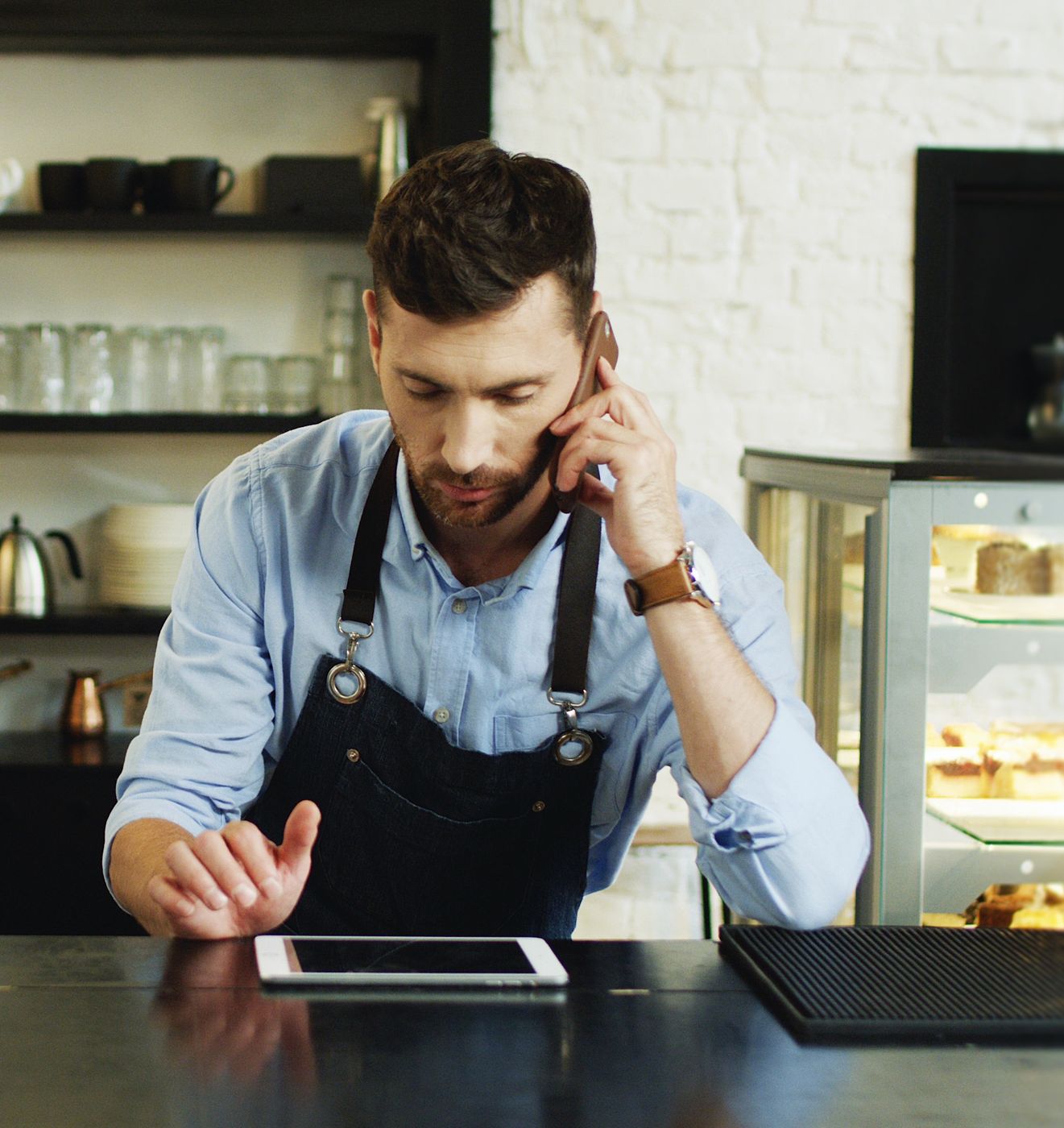
In this resource, we'll focus on phone systems for restaurants. We noted a few phone system brands, but it's worth breaking down all your options and better understanding which would work best in the context of your restaurant ecosystem.
Let's get started.

Running a successful restaurant can be fast-paced and unforgiving. The last thing you need is a phone system that slows you down or contributes to chaos. A well-designed phone system can help you manage high call volumes during peak hours, streamline communication channels, and provide a better experience for your customers.
For example, traditional landline systems have severe limitations. Even with multiple lines, you might struggle to manage incoming calls during busy services. When this happens, you're more likely to lose revenue from missed reservations, have less-than-stellar guest experiences, and distract employees.
A modern phone system can help you handle large call volumes more efficiently, ensuring you take advantage of every opportunity to engage your guests. The best phone systems also integrate with the other technologies in your restaurant, such as reservation management software and point-of-sale systems.
Not only are these seamless connections more convenient for your employees, but they also create a more cohesive experience for customers. If you want them to keep coming back, make it easy for them to interact with your business.
It's time to ditch your landline. Here's why.
As a restaurant, you need to be consistently reachable for customers. Your phone system should make it easy for customers to reach out regarding reservations, inquiries, feedback—anything. This helps create a positive experience, increasing the likelihood that they will choose your restaurant over competitors and become repeat customers.
Assigning staff to wait by the phone is a waste of time and energy. An advanced phone system streamlines restaurant communication and frees staff to focus on other tasks. This helps reduce response times and can result in better customer service.
The best phone systems are easier to use and require minimal staff training. Additionally, some phone systems have cost-saving features like call forwarding, call recording, and advanced analytics, reducing overall expenses.
A high-quality phone system reflects well on your restaurant, giving the impression of a well-run and organized establishment. This can help attract and retain customers who value professionalism and attention to detail.
As your restaurant grows, it's crucial to have a phone system that can adapt to your changing needs. The best phone systems for restaurants grow with your business and allow you to add new lines, extra features, or seamless integrations with the rest of your tech stack.
The restaurant industry is infamous for being slow to adopt new technology. However, the pandemic forced many restaurants to seek innovative solutions to the unprecedented nature of COVID. Modern phone systems, particularly those powered by AI, offer a range of advanced features that customers have now come to expect. These include virtual assistants, automated reservations, and multichannel communication, which can contribute to a more seamless and efficient customer experience.
Some people think new tech can make the customer experience feel cold or impersonal.
According to a survey by Deloitte, 70% of diners believe technology improves their dining experience.
When Slang AI surveyed restaurant operators in an AI study, 45% believed customers would respond positively to AI-driven interactions, and a staggering 94% said AI would become necessary to stay competitive.
Even in a world where digital communication is more prevalent than ever, people still make phone calls.
When it comes to restaurants, there are various reasons why potential guests could be reaching out. Understanding why can help management and operators form a strategy for handling calls.
Whether it's training staff on phone call etiquette and protocols or setting up the triage flow for an AI phone answering system, you need a game plan for each type of customer call.

One of the most common reasons customers call restaurants is to make reservations. Additionally, customers may have special requirements and questions, such as wheelchair accessibility, pet policies, or a preferred seating area.
Many restaurants use online ordering systems for takeout and delivery, but some customers still like placing orders over the phone. This allows them to ask questions, customize their order, or request specific delivery instructions.
Customers often call to inquire about the menu, especially if they have dietary preferences or allergies. They may want to know if the restaurant offers gluten-free, vegan, or vegetarian options or if certain dishes contain specific allergens.
Customers ask questions about hosting events such as birthdays, anniversaries, or corporate functions. They may want to discuss event packages, menu options, pricing, and availability of private spaces. Similarly, customers may call to discuss catering services for off-site events.
Customers sometimes call to confirm operating hours or get directions to the location. This information is often available online—though some customers prefer to check with restaurants directly, particularly if visiting during holidays when hours might be different. Additionally, some restaurants may not consistently update their business hours online for special circumstances.
Customers may call restaurants to provide feedback, share dining experiences, or lodge complaints. Guests might praise staff for exceptional service, suggest areas of improvement, or express dissatisfaction with food or service.
Restaurants may offer gift cards, promotions, or discounts that customers want to learn more about. There could be questions about terms and conditions, the process of purchasing gift cards, or any restrictions that may apply.
Did you know 85% of customers will call a competitor if they can't get through to your restaurant?
Did you know the average restaurant sees 3x more calls on Saturday than any other day of the week?
Additionally, holidays can increase your call volume by 20%.
Too often, restaurants cling to the phone system they've had since day one. Of course, as technology changes and guest expectations shift, the landline you've used since 1999 isn't going to cut it anymore.
When you're ready to explore modern solutions, the question becomes understanding what phone system will best suit your needs. For example, a 20-seat cafe won't need the same phone system as a 300-capacity full-service restaurant with event space and outdoor seating. And a mom-and-pop shop won't require the same functionality a fast-casual restaurant chain would need.
It's all about understanding your options and making the best choice for your business. We outlined all the common phone types used in restaurants today. Additionally, it's essential to know other details like installation and maintenance requirements and their benefits and drawbacks. Here are the most common types of phones in restaurants today.

Traditional landlines, also known as Public Switched Telephone Networks (PSTN), have been the backbone of communication in businesses, including restaurants, for many years. They rely on a network of copper wires and telephone exchanges to transmit voice calls. Despite the rise of digital telephones, landlines remain popular due to their familiarity and ease of use.
Landlines are quickly becoming a thing of the past. They're essentially non-existent in homes now except in some of our parent's or grandparents' homes who are reluctant to get rid of a line they've had since the 80s. Having said that, many businesses still use them because it's what they've always had, which is why we are covering it here. In fact, if your landline isn't connected to the internet by 2025, it will no longer work because the PSTN is pulling the plug (pardon the pun) on all landline communications.
To set up a traditional landline in a restaurant, the following will typically happen:
The first step is to contact a local telephone service provider, who will help you establish a new phone line or transfer an existing one to your restaurant.
The service provider may send a technician to your restaurant to evaluate the location and determine the best way to install the landline, considering factors such as the building's structure, wiring, and existing telephone infrastructure.
The technician will install phone jacks at the desired locations within your restaurant. This may involve drilling holes, running copper wires through walls, and connecting the wires to the telephone exchange network.
Once the phone jacks are in place, you can plug in your landline devices. These can be simple corded or cordless phones, multi-line systems, or more advanced devices with features like caller ID, call forwarding, and speakerphone capabilities.
Traditional landlines are generally low-maintenance but require some attention to ensure optimal performance. Here are a few maintenance tips:
Check the copper wiring for any signs of wear or damage and replace it if necessary. Damaged wiring can lead to poor call quality and connection issues. Clean phone devices: Keep the phones clean by wiping them with a damp cloth or disinfectant wipe, paying particular attention to the handset, keypad, and cords.
Periodically test your landline by making and receiving calls to ensure the connection is clear and reliable. If you encounter any problems, contact your service provider for assistance.
If you experience any issues with your landline, such as static, dropped calls, or a lack of dial tone, contact your service provider to diagnose and resolve the problem. Timely intervention can help prevent minor issues from escalating into more significant problems.
IP (Internet Protocol) phones are fairly common in restaurants and businesses due to their advanced capabilities and cost-effectiveness. These phones use the internet to transmit voice calls, making them popular for establishments that prefer modern communication solutions. IP phones offer numerous features, such as easy scalability, integration with other digital tools, and access to advanced calling options.
Setting up IP phones in a restaurant involves the following steps:
Select a reputable provider that offers IP phone systems with features and capabilities suitable for your restaurant's needs. Some providers may cater specifically to the restaurant industry, offering tailored solutions and integrations.
Ensure your restaurant has a stable and high-speed internet connection, as IP phone systems rely on this for call quality and reliability. You may need to upgrade your current connection or switch to a dedicated line for the IP phone system.
Depending on the chosen IP phone service provider, you may need to install hardware such as IP phones, a VoIP gateway that connects to your existing phone system, or ATA (Analog Telephone Adapters) for existing analog phones. You could also use softphones, which are software-based phone systems that can be installed on computers or mobile devices.
Once the hardware is in place, configure the IP phone system according to your restaurant's requirements, such as setting up extensions, call routing rules, voicemail, and other features offered by your IP phone service provider.
IP phone systems require regular maintenance to ensure optimal performance. Here are some maintenance tips:
Regularly check your internet connection's stability and speed, as it directly impacts the IP phone system's call quality and reliability. Address any connectivity issues with your internet service provider.
Keep the IP phone software and firmware updated on all devices, as this ensures the system runs smoothly and securely. Updates may include security patches, bug fixes, or new features.
To prevent data loss or downtime, back up your IP phone system's settings, call logs, and voicemail messages regularly.
Use the analytics and monitoring tools provided by your IP phone service provider to track system performance, call quality, and usage patterns.
VoIP (Voice over Internet Protocol) phones use the internet to transmit voice calls rather than relying on traditional copper-wire telephone lines. These phones offer advantages such as easy scalability, integration with other tools, and access to advanced features.
There are two kinds of VoIP phone systems. In-house, which means equipment is installed in your restaurant to operate over the Internet. Or cloud-based, which typically means lower installation costs and little to no equipment on premises. Be aware that a cloud-based VoIP system lacks control over upgrade timing, and pricing increases will happen over time.
Setting up a VoIP phone system in a restaurant involves the following steps:
First, select a reputable VoIP service provider that offers plans and features suitable for your restaurant's needs. Some providers may cater specifically to the restaurant industry, offering tailored solutions and integrations.
Ensure your restaurant has a stable and high-speed internet connection, as VoIP phone systems rely on it for call quality and reliability. You may need to upgrade your current connection or switch to a dedicated line for the VoIP system.
Depending on the chosen VoIP service provider, you may need to install hardware. Such as IP phones, ATA (Analog Telephone Adapters) for existing analog phones, or a VoIP gateway that connects to your existing phone system. Or, you can opt for softphones—software-based phone systems installed on computers or mobile devices.
Once the hardware is in place, configure the VoIP system according to your restaurant's requirements, such as setting up extensions, call routing rules, voicemail, and other features offered by your VoIP service provider.
VoIP phone systems require regular maintenance to ensure optimal performance. Here are some maintenance tips:
Regularly check your internet connection's stability and speed, as it directly impacts the VoIP phone system's call quality. While significantly more modern than landlines, this might not be a good choice if your restaurant is in an area with an unreliable internet connection.
Keep the VoIP software and firmware updated on all devices, as it ensures the system runs smoothly and securely. Updates may include security patches, bug fixes, or new features.
To prevent data loss or downtime, back up your VoIP system's settings, call logs, and voicemail messages regularly. This enables you to restore the system quickly in case of hardware failure or other issues.
Use your VoIP service provider's analytics and monitoring tools to track system performance, call quality, and usage patterns. This data can help you identify issues and optimize the system for better performance.
KSU (Key Service Unit) phones are suitable for small to medium-sized establishments, including restaurants. These phones use a central control unit that routes calls between multiple phone lines and extensions within the restaurant. KSU phones offer various features, such as call forwarding, hold, conferencing, and intercom functionality.
Setting up a KSU phone system in a restaurant involves the following steps:
Choose a reputable provider that offers KSU phone systems with the features and capabilities suitable for your restaurant's needs.
A technician will visit your restaurant to assess the premises, considering factors such as the building's structure, wiring, and existing phone infrastructure.
The technician will install the central KSU to connect to your incoming phone lines and manage call routing between extensions. The KSU should be placed in a secure and accessible location, such as a dedicated server room or an office space.
Technicians will run wiring from the KSU to various phones within your restaurant, connecting each phone to the central unit. This wiring will enable the KSU system to manage and route calls between extensions.
Once the wiring and hardware installation is complete, the KSU system will need configuration according to your restaurant's requirements. This includes setting up extensions, call routing rules, hold music, and other features your KSU phone system provides.
Maintaining a KSU phone system in a restaurant involves the following:
Regularly check the wiring for any signs of wear, damage, or loose connections. Damaged wiring can lead to poor call quality and connection issues.
Keep the phones clean by wiping them with a damp cloth or disinfectant wipe, paying special attention to the handset, keypad, and cords.
Periodically test your KSU phone system by making and receiving calls, using the hold and transfer features, and testing the intercom function.
Track the performance of your KSU phone system, including call quality, dropped calls, and any other issues that may arise. Address problems promptly by contacting your service provider or troubleshooting the issue internally.
If your KSU system uses software and firmware for its operation, ensure these are updated regularly.
Non-KSU phones, also known as keyless or multi-line phone systems, are great for small restaurants or businesses requiring a simple and cost-effective phone system. These phones can handle multiple lines without a central control unit, like a KSU system. Ideal for restaurants with limited phone lines and extensions, offering basic features like hold, call transfer, and conference calling.
If you grew up using a landline, then non-KSU phones are what you use at home. These are very basic phones, but be aware that phone companies may charge more because it's a business line, not a home line. It will be challenging to grow and scale your business using these kinds of phones, so upgrade your phone system when your business is ready.
Setting up non-KSU phones in a restaurant involves the following steps:
Select a suitable non-KSU phone system with the desired number of lines and features that meet your restaurant's communication requirements.
Contact a local telephone service provider to establish new phone lines or transfer existing ones to your restaurant.
A technician will install phone jacks at the desired locations within your restaurant, connecting them to the incoming phone lines. This may involve drilling holes, running wires through walls, and connecting the wires to the telephone network.
Once the phone jacks are in place, plug in the non-KSU phone devices. These phones are typically multi-line phones, with each line represented by a separate button on the device.
Maintaining non-KSU phones in a restaurant involves the following:
Regularly check the wiring for any signs of wear, damage, or loose connections.
Keep the phones clean by wiping them with a damp cloth or disinfectant wipe, paying special attention to the handset, keypad, and cords.
Periodically test your non-KSU phone system by making and receiving calls on each line. This ensures that all lines are functional and provide clear and reliable connections.
Track the performance of your non-KSU phone system, including call quality, dropped calls, and any issues that arise. Address any problems promptly by contacting your service provider or troubleshooting the issue internally.
PBX phone systems connect a restaurant's phones to the public phone network, allowing communication both inside the restaurant and with outside callers.
These systems provide features like call forwarding, voicemail, automated receptionist, call waiting, and compatibility with other digital tools. PBX phone systems are great for restaurants with multiple locations. Different venues have the capability to transfer calls from location to location.
Setting up a PBX phone system in a restaurant involves the following steps:
Select a reputable provider that offers PBX phone systems with features and tools suitable for your restaurant's needs. PBX systems can be traditional on-premise systems, hosted (cloud-based) systems, or a hybrid of both.
For traditional on-premise PBX systems, this may include a PBX control unit, phones, and wiring. You'll need IP phones or softphones and a stable internet connection for hosted PBX systems.
For on-premise PBX systems, a technician will install the PBX control unit and connect it to incoming phone lines and internal extensions. For hosted PBX systems, you'll need to configure your IP phones with the appropriate settings provided by your service provider.
Once the hardware and infrastructure are in place, configure the PBX system according to your restaurant's requirements. This includes setting up extensions, call routing rules, voicemail, auto-attendant, hold music, and other features.
Maintaining a PBX phone system in a restaurant involves the following:
For on-premise PBX systems, regularly check the wiring for any signs of wear, damage, or loose connections.
Keep the phones clean by wiping them with a damp cloth or disinfectant wipe, paying special attention to the handset, keypad, and cords.
Ensure that the PBX system software and firmware are updated regularly. Updates may include security patches, bug fixes, or new features.
To prevent data loss or downtime, back up your PBX system's settings, call logs, and voicemail messages regularly.
Use analytics and monitoring tools provided by your PBX system to track system performance, call quality, and usage patterns.

Clearly, there are a lot of options when it comes to phone systems. But which is best for your needs? When deciding which phone system to invest in, don't get swept up by all the bells and whistles. Take some time to reflect and ask yourself the following questions.
Look critically at every feature and consider the benefits it brings to your restaurant. Sure, a phone might have a lot of bells and whistles, but if the features aren't really applicable to your restaurant, it might be overkill. You'll end up paying too much for features you don't actually need. Write down if you see how a feature can benefit your restaurant. At the end of your evaluation, it might not be a good fit if there are more features than benefits.
Different venues certainly need different phones—a 200-person nightclub with event spaces has different needs than a morning cafe/coffee shop. Each requires a phone, but a cafe probably doesn't need multiple lines. Be sure to keep business growth plans in mind when evaluating phone systems too. The last thing you want to do is invest in a system that can't scale to meet your growing business needs. If you plan to expand your restaurant, you need a phone system that can handle the increased volume of calls.
Determine if the system requires special equipment or if the installation uses your existing phone lines. Also, consider if the installation process is easy and if there is any downtime during the installation process. Having to shut down for a full or half day might not be in the cards for a busy restaurant, especially if it requires tearing holes in the walls and running lines everywhere. If on-site equipment is required, do you have the space to keep it somewhere? Most restaurant offices are tiny to make more space in the dining room. You might need a phone system that doesn't require on-premises equipment.
You should find out how much the system costs upfront and if there are any ongoing costs, such as maintenance fees or service charges. You should also consider if the system comes with a warranty and if there are additional costs for upgrades or new features. Cloud-based systems shouldn't require much maintenance other than software updates, but that should take place in the cloud. Be sure to ask about upgrades and if you'll need to pay more for added features when upgrades occur.
AI, in general, is the future of many industries, and restaurants are no exception. AI phone answering software is a terrific first step toward that future.
Whether you're ready for it or not, AI is coming to all restaurants. It's just like the introduction of POS systems years ago. Eventually, everyone stopped handwriting tickets and moved to solely using computers.
The same can be said for AI phone software—it's too efficient and cost-effective not to use the technology once restaurant owners see how beneficial it can be for their business. With its ability to handle an endless workload and integrate with other restaurant software, it's just a matter of time before it becomes the industry standard.
Whether it's taking reservations over the phone or taking orders, these touchpoints take time, energy, and manpower. AI technology in phone or POS systems automates a lot of those tasks which means you can spend less money on staffing your restaurant which will help lower costs in the long run.
When people man those tasks, there's always the opportunity for human error. AI minimizes errors in reservations, orders, and more which will not only make your operations run more smoothly but keep your customers happy.
AI isn't limited to Sci-Fi or academic papers; it's baked into our daily lives. We're used to asking our devices for help and expect information tailored to our experience. Incorporating AI into your restaurant operations—especially in the front-of-house—will help you deliver the top-notch experience your customers have come to expect.
Automated voice systems powered by AI can handle routine tasks, freeing up staff for more complex and strategic responsibilities. A great example would be calling a restaurant to make a reservation. Voice-driven AI for restaurants can handle the entire process so customers get the attention they deserve while staff doesn't have to hang around the phone just in case someone calls in.
Some argue that incorporating voice AI technology into business makes things seem more robotic. However, there have been so many advancements in AI that it actually has the reverse effect. Voice AI technology allows businesses to personalize customer interactions, tailoring responses and services based on individual preferences. This level of customization enhances the overall customer experience.
The vast data generated through voice AI interactions gives businesses valuable insights. Analyzing voice data allows businesses to understand customer sentiments, preferences, and trends. This data-driven approach empowers companies to make informed decisions, refine their strategies, and stay ahead of market demands.
The Genuine Hospitality Group struggled to juggle all the calls coming into their restaurants, which left staff feeling busy and customers feeling underappreciated. Once they invested in Slang AI, an AI phone system, they saw the following results.
Keep the pros and cons, installation steps, and evaluation checklist on hand as you compare phone systems for your restaurant.
Slang AI is an AI voice tool built for restaurants to automate the booking process, streamline reservations, and improve customer experiences.
Ready to learn how you can create better experiences and empower your staff to focus on in-house guests? Sign up for a 10-minute call today to see how it works.
Get a demo